

Have you ever thought about what it would feel like to be walking among a graceful herd of elephants? These beautiful creatures, believe it or not, have complex social lives — similar to humans! Come along with me as I explore elephant social structures and discover what makes these animals truly fascinating.
The Matriarchy
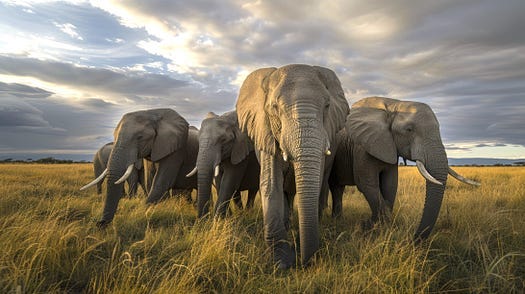
You may have already known this, but elephant herds are guided by females. The oldest and wisest female is called the matriarch and makes important decisions for her group. I fondly remember on a trip to Kenya, watching an old, elegant matriarch gracefully lead her tribe through the parched savannah to a dwindling waterhole. It was a moment filled with awe, as she drew on her vast experience and memories to guide her herd toward the life-giving source.
The Heartbeat of Elephant Herds
Elephants treasure their family. They stick together forming strongly bonded groups. Have you ever seen how well an elephant calf gets treated? The whole herd takes care of it, nurturing and protecting it from danger.
In Sri Lanka, I had the privilege of observing a sentimental moment: a group of female elephants surrounding a newborn calf as they guided her through her first bath. I was spell bounded by the sight of these majestic creatures, their powerful yet gentle trunks lifting the calf’s head above the shimmering water, while they lovingly groomed her with delicate strokes. The atmosphere resonated with a profound sense of trust and teamwork among the herd members, showcasing their ability to care, and unity in nurturing the youngest among them.
The Role of Male Elephants
So how about the males? Well, they leave the herd once they reach their teenage years, forming bachelor groups or living their lives alone. I remember an encounter where a young bull, freshly separated from his herd, was trying to integrate with an older male. The scene reminded me of a young adult human departing from their family for college for the first time and discovering somewhere new.
Insights into Elephant Communication
Elephants have complex language and social signals. They are known to use body language, specific calls and grunts, and vibrations traveling through the ground to communicate.
In Kenya, I remember the ground trembling ever so slightly, a subtle yet powerful indicator that an elephant was nearby before it came into full view. This natural phenomenon demonstrated their remarkable ability to stay connected within their expansive environments.
Concluding Thoughts
The social structure of elephants is both complex and deeply intriguing. From the elegant elders to the energetic calves, each member of the herd contributes in its own way to its harmony and survival. Their ability to form strong connections, communicate effectively, and care for their young shows an amazing parallel to human societies.
Elephant social lives have always left me with a sense of wonder and admiration for them. Watching their behavior has reinforced my need to protect these majestic creatures and preserve their habitats for future generations to come.
Loved the insights in this article? Subscribe now for more stories about wildlife, nature, and efforts to preserve our planet's incredible biodiversity. Join our community of nature enthusiasts and stay inspired to make a difference every day!